
Regenerative Farming, Shade Trees & Agroforestry on a Coffee Farm
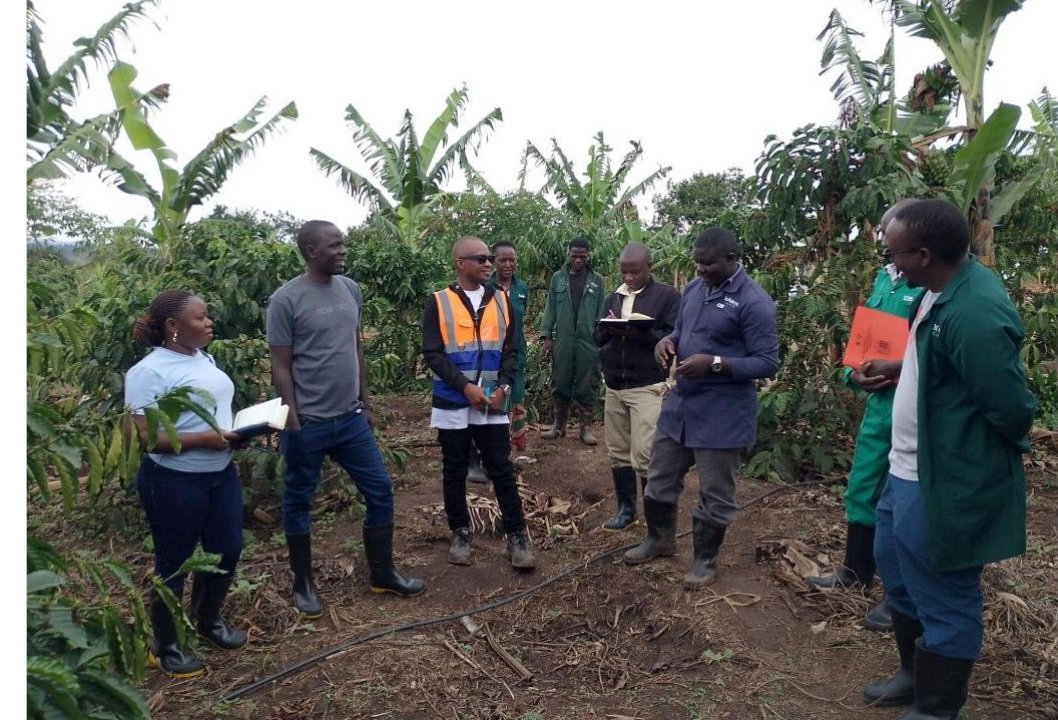
A coffee farm doesn't have to be just coffee. Done well, shade trees, windbreaks and the right mix of companion species make a farm more productive, more resilient to weather extremes, and more profitable — while restoring rather than depleting the land underneath it. This is the principle behind regenerative agriculture: imagine a farm where nothing is wasted, and every input feeds back into the system. The best coffee farms we've seen come closest to a garden of Eden — dense, layered, and self-sustaining.
Why Shade Trees and Windbreaks Matter
Shade trees protect coffee from heavy rain, high solar radiation and wind, reduce weed pressure, slow cherry ripening in a way that improves bean density and cup flavour, and create a cooler, more stable microclimate around the coffee canopy. Windbreaks planted along farm boundaries reduce wind speed across the whole block, cutting water evaporation and the risk of wind damage to flowering trees.
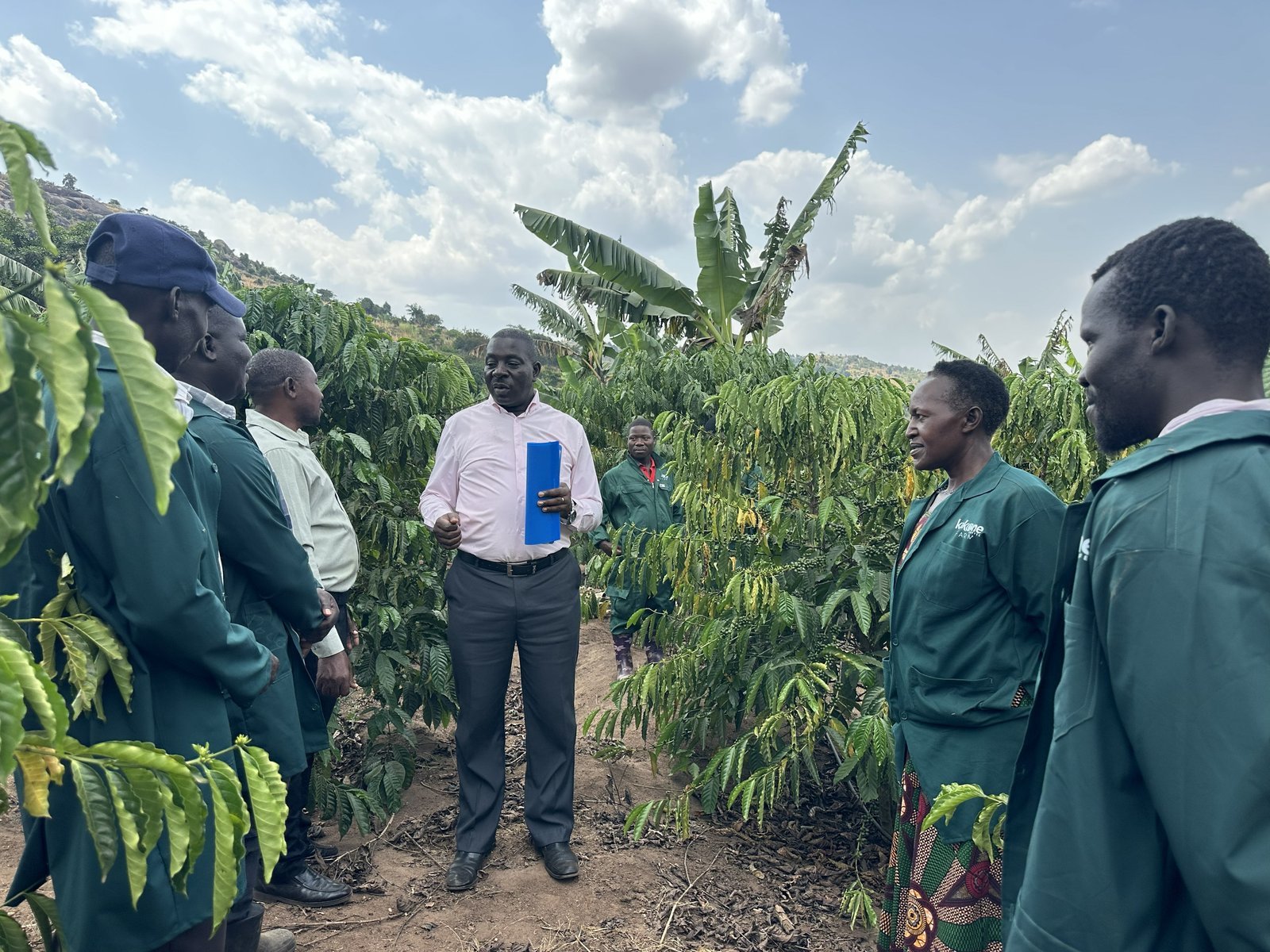
But shade is a balance, not a maximum: even the best, most recommended shade trees need to be actively managed and thinned, because too much shade restricts the light coffee needs to flower — see our guide to why coffee needs light and air to flower. The goal is dappled, managed shade — not a closed canopy.
Spacing for Shade Trees
As a young project, shade trees can be planted closer together — around 20ft apart — with the intention of thinning them out over time for other uses (timber, firewood, fencing). On hilly land, mature shade tree spacing widens to around 15m; on flatter or gently sloping land, 45m by 45m gives good, even shade cover without over-shading the coffee beneath. The general rule: plant as many trees as the land can sensibly carry while young, then manage them down as they mature.
Pollinators: Calliandra
Calliandra is a farm favourite for more than one reason. Bees love its flowers, making it a valuable pollinator-support species that feeds into better coffee fruit set (see our beekeeping guide) — more pollination activity on the farm means more coffee beans per tree. On top of that, Calliandra works well for mulching, and its leaves make good goat feed, making it a genuinely multi-purpose addition to a coffee farm's tree mix.
Mugavu (Albizia coriaria)
Mugavu is one of our most-used native shade species — planted at around 12 trees per acre, well below coffee's own planting density, so it shades without crowding. It's a nitrogen-fixing tree that improves soil fertility as it matures.
Recommended vs. Not-Recommended Trees for a Coffee Farm
| Tree | Why |
|---|---|
| Mugavu (Albizia coriaria) | Our standard shade tree — nitrogen-fixing, plant at ~12 trees/acre. |
| Albizia (general) | Good for cattle — provides browse/fodder alongside shade. |
| Ficus natalensis (Omutuba) | Best source of firewood and goat feed on the farm. Regenerates very fast after cutting, so it can be harvested repeatedly. |
| Omukunyu (sycamore fig) | Birds love its fruit, and its small leaves cast a lighter, more manageable shade over coffee. |
| Omusambya | Not recommended near coffee — its soft tissue harbours Coffee Twig Borer (CTB). (It is, however, good shade for Arabica.) |
| Omusizi | Soft tissue harbours black wilt-associated pests — avoid near coffee. |
| Avocado | Soft tissue harbours the same pest risks as Omusambya and Omusizi — avoid near coffee. |
| "Improved" / Chinese Albizia (long-leafed) | Not the same as standard Albizia — avoid this long-leafed variety near coffee. |
| Fene (Jackfruit) | A useful tree, but keep it to the farm/tree boundary rather than inside coffee blocks. |
Omusambya, Omusizi and Avocado all share soft plant tissue that harbours pests linked to black wilt and Coffee Twig Borer — remove these as host plants from in and around coffee blocks. See our pests & disease guide for how CTB spreads.
A Medicinal Tree Worth Knowing: Entasesa (Prunus Africana)
Prunus Africana ("Entasesa") is an endangered tree species whose dried leaves are traditionally used as a treatment for prostate conditions. Because it is endangered, it should be planted and conserved thoughtfully rather than harvested unsustainably from the wild.
Agroforestry, in One Sentence
Our working principle is simple: the right tree, for the right reason, and for the right purpose — shade, windbreak, fodder, firewood, pollinator support or soil fertility — chosen deliberately rather than whatever grows fastest.
The Four Pillars of Coffee Sustainability
We plan our farm and agroforestry decisions against four pillars of sustainability — Social, Environmental, Economic and Governance (EECG) — so that a farm stays viable on all four fronts, not just the ones that are easiest to measure.
Social
Fair treatment of farm workers and outgrowers, community education (Every Cup Educates a Child), and farmer training.
Environment
Shade trees, agroforestry, water conservation, soil health and biodiversity across every farm block.
Economy
A coffee farm that pays for itself — for the farmer, the outgrower, and everyone along the value chain.
Governance
Record-keeping, biosecurity policy, and transparent reporting on every farm we manage.
Intercropping Bananas & Gonja
Bananas and gonja (plantain) intercropped between young coffee rows do double duty — food for farm staff, and a genuine income stream while the coffee is still maturing. From our own experience on the Kakone farm, gonja consistently earns more income than ordinary bananas for the same amount of land, so where the market allows it, we lean toward gonja as the better-earning of the two. Read our full guide to banana & gonja intercropping → for spacing, the advantages and disadvantages, and how to get the best out of it.
A Note on Legumes and Intercropping
It's common practice to let women farm workers use the untilled ground between young coffee rows to grow legumes, on the traditional understanding that legumes fix nitrogen into the soil. In practice, many modern legume varieties no longer fix nitrogen as reliably as older varieties did — so a coffee farm shouldn't rely on intercropped legumes alone for soil fertility. A more circular approach — combining organic manure, shade tree leaf litter and, where available, integrating poultry or livestock manure — gives more dependable, sustained soil fertility.
Want your farm's shade and agroforestry plan mapped out properly? See our Farm Setup & Management services.