
Brazilian-Style Spacing for Robusta Coffee — Is It Worth It?
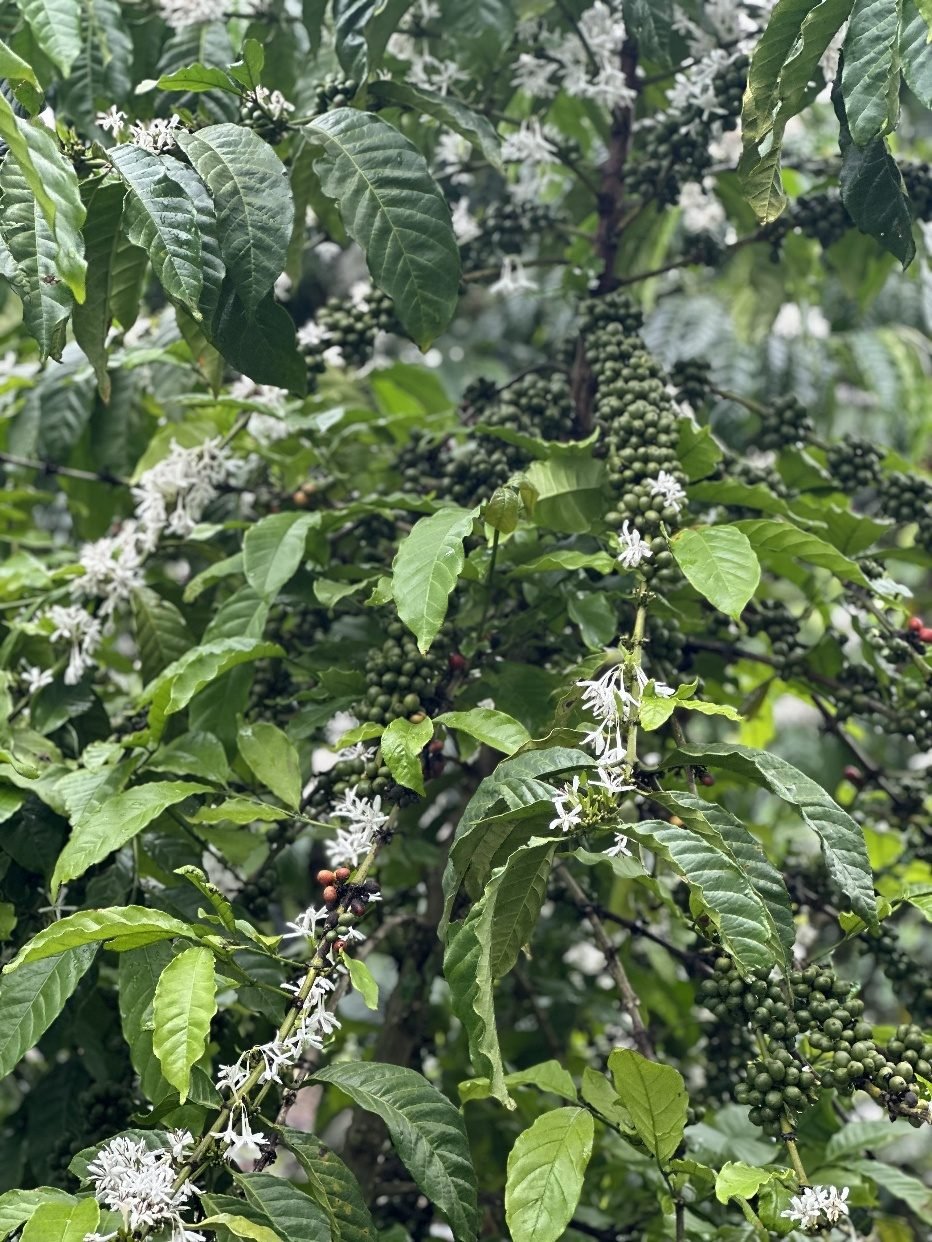
It's one of the most common questions we get from new farmers, especially anyone who has read about Brazil's high-density coffee plantations: "Should I plant my Robusta closer together, Brazilian-style, to fit more trees per acre?" It's a fair question — more trees per acre sounds like more coffee. On our own farm, and by NaCORI's own recommendation, the answer is no. Here's why.
Why Spacing Isn't Just About Fitting More Trees In
A coffee tree doesn't just need soil and water — it needs light and air to flower well. Flowering is triggered by a combination of rainfall and sunlight reaching the tree's canopy, and once flowers set, the developing cherries need continued light penetration and air circulation to fill out properly. Densely packed trees shade each other out, restrict airflow through the plantation, and directly cut into the light a tree needs to flower and fruit at its best.
Robusta coffee also naturally grows into a fairly wide-canopied shrub — around 4ft wide at maturity, sometimes more if left untrained. Brazilian-style spacing, developed for different soils, mechanised harvesting and often different varieties, packs trees far closer together than that canopy width allows for here. On a Uganda Robusta farm, that density means trees crowding into each other within a few years, exactly when they should be reaching peak production.
What Goes Wrong With Overly Dense Spacing
- Restricted flowering. Less light reaching the lower and inner canopy means fewer, weaker flowering nodes.
- Smaller beans, lower weight. Crowded trees compete for the same soil nutrients and light — with more trees drawing on a fixed area of soil, each tree (and each bean) gets less, reducing bean size and weight even when flowering happens.
- Pest and disease pressure builds. Poor airflow between crowded trees keeps humidity high and sunlight out — exactly the conditions coffee twig borer and fungal disease prefer.
- Harder to manage. Weeding, pruning, spraying and harvesting all get physically harder once trees have grown into each other.
- One tree, one planting point. Some dense systems plant multiple stems or seedlings per hole to force more volume into less land — this simply reproduces the same crowding problem at the level of a single planting point, and Kakone Coffee does not recommend it.
NaCORI's Recommendation — And What We Plant
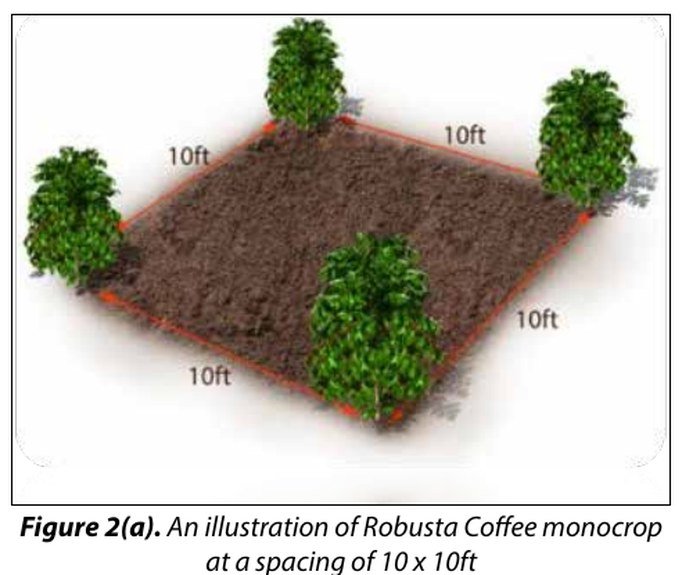
Uganda's National Coffee Research Institute (NaCORI) recommends 10ft × 10ft (3m × 3m) spacing between every Robusta coffee tree, in every direction — which works out to about 450 coffee trees per acre. This is the spacing we use across our own farm blocks in Mubende, and the standard we set out for every farm we set up under our Farm Setup service.
NaCORI is running trials aimed at increasing tree density per acre in future — but until that research is proven and released as a new recommendation, 10ft × 10ft remains the standard that gives Robusta coffee the light and air it needs to flower fully, fill out its cherries, and stay manageable and healthy for the life of the tree — often 50 years or more.
Setting up a new farm and want the spacing marked out and pegged correctly from day one? See our Farm Setup service or read our garden preparation guide.